
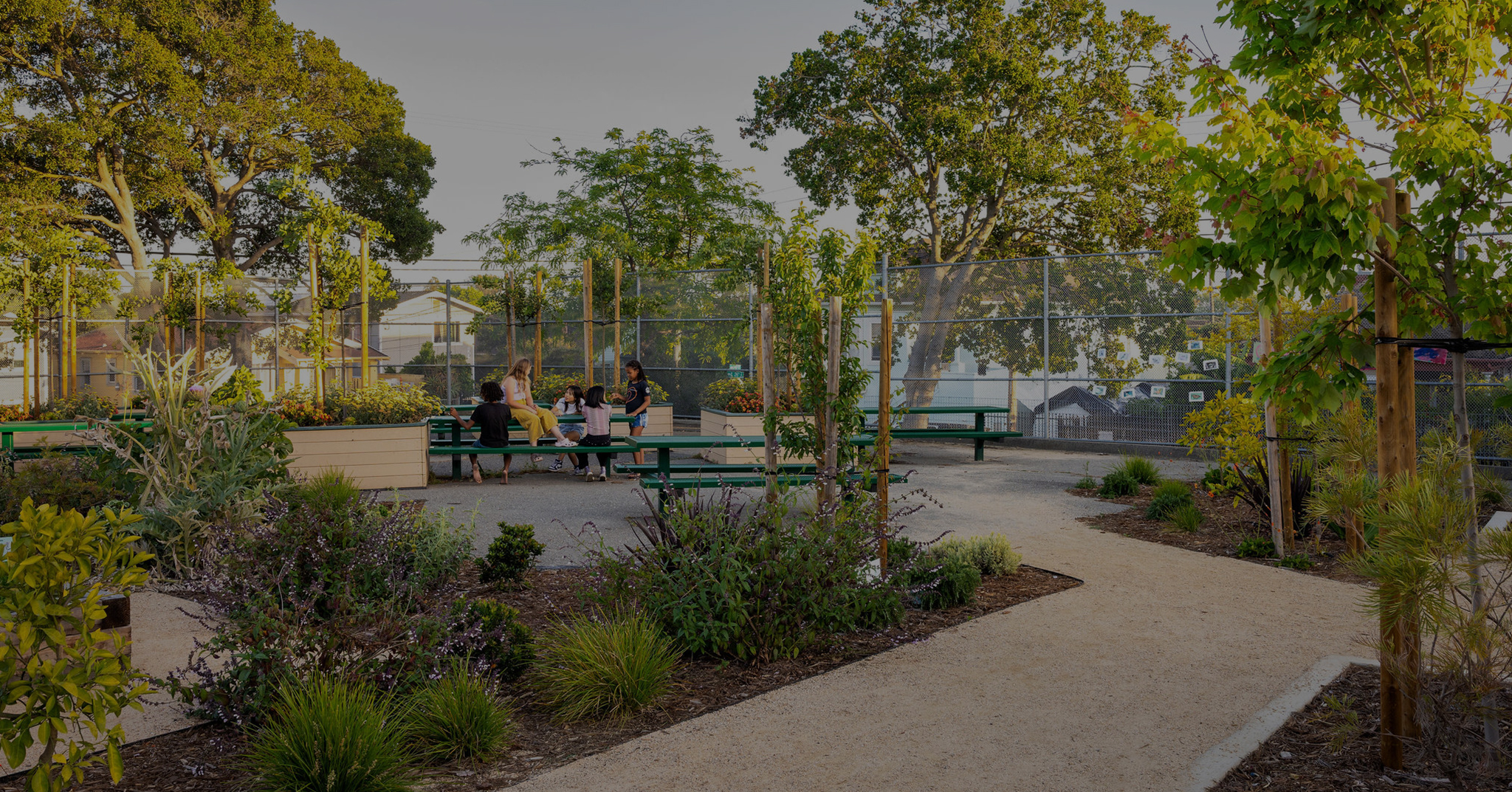
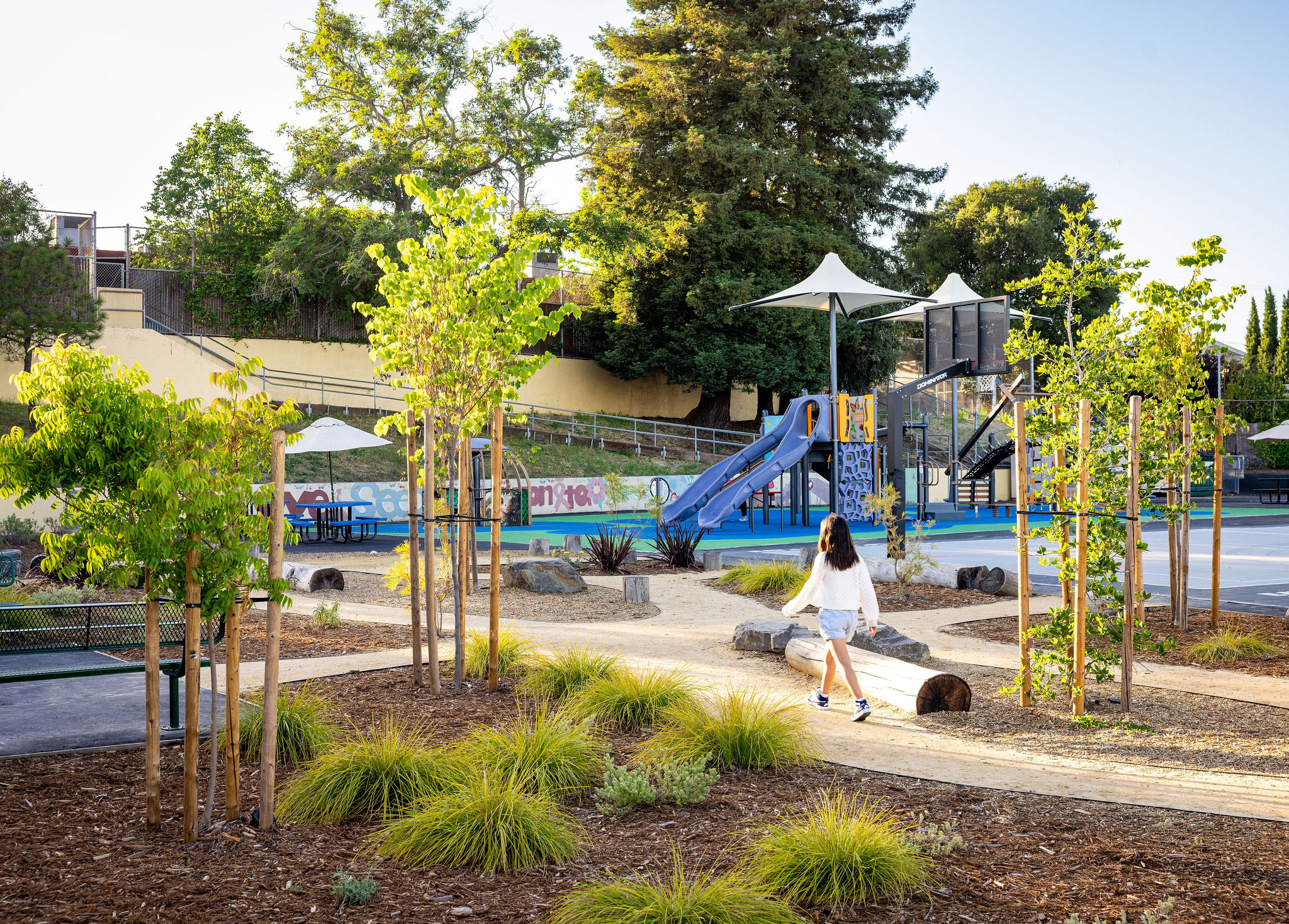
Across Oakland, schoolyards once dominated by asphalt and underutilized lawns were reimagined as greener, more engaging spaces for students to learn, play, and connect with nature.
Through Oakland Unified School District’s Living Schoolyards Initiative, Siegfried provided civil engineering, land surveying, and landscape architecture planning services across nine campuses, with implementation at MLK Jr. Elementary School and Manzanita Community School.
The projects introduced outdoor classrooms, gardens, natural play spaces, shaded gathering areas, and sustainable site improvements designed to support student well-being and create more meaningful outdoor environments. Working closely with OUSD, and the project team, and stakeholders, the team developed solutions that integrated accessibility and functionality with increased tree canopy, improved stormwater management, and stronger connections to the natural environment.
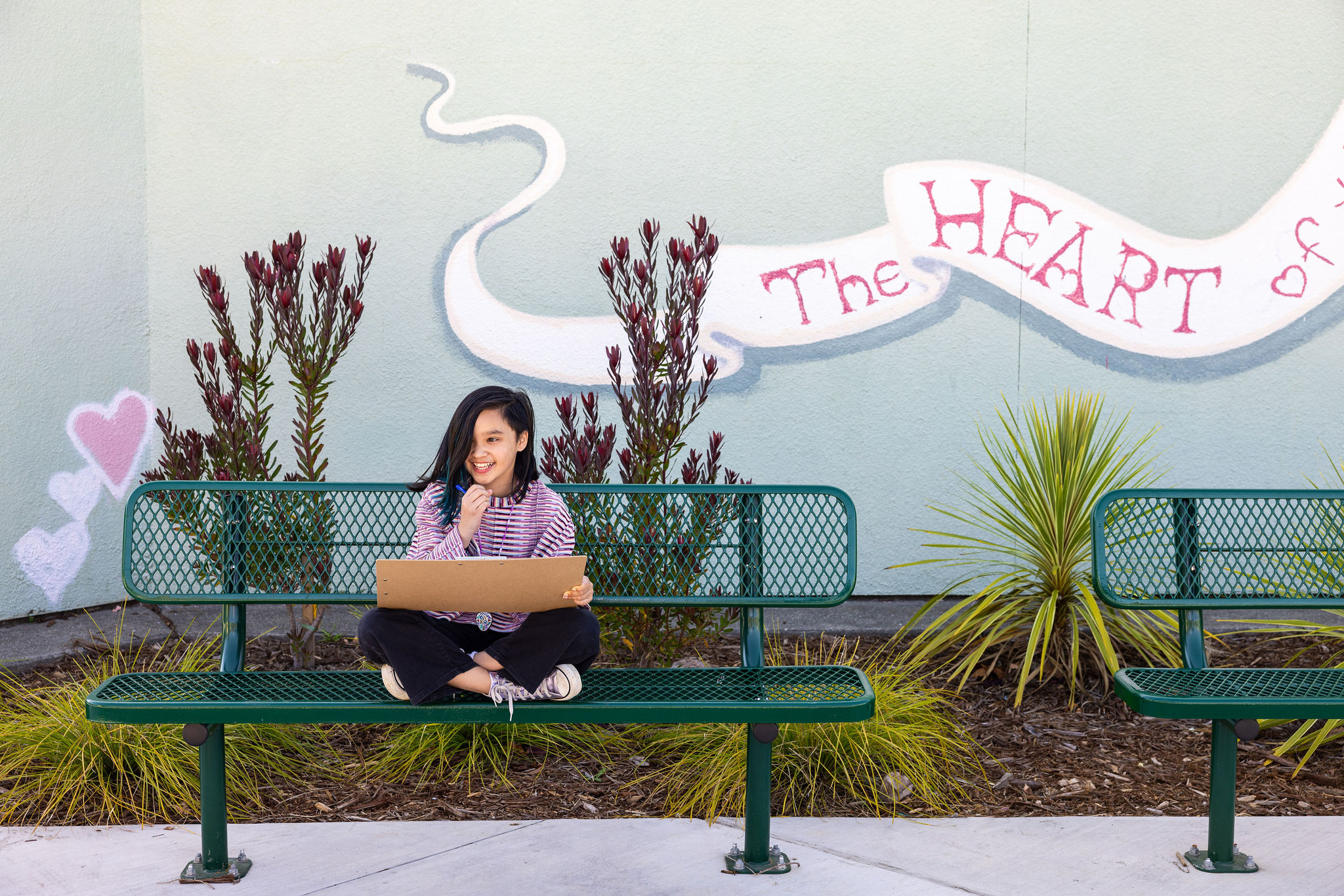
For Siegfried’s Landscape Architecture Manager, Thais Del Castillo, PLA, LEED AP, the projects were especially meaningful, both professionally and personally. Reflecting on the experience, she shared why the Living Schoolyards projects stood out and what creating engaging outdoor spaces for children meant to her:
“Schoolyards play such an important role in the lives of schoolchildren, yet all too often they are dominated by asphalt, with little plant life beyond a mediocre lawn, and if we’re lucky, a few trees. I have always known that schoolyards can—and should—be so much more than places for children to run around on the blacktop or lawn during recess. They can be places to experience nature, discover new things, gather with friends, and create memories that stay with them long after they leave elementary school.
The OUSD Living Schoolyards projects were an incredible opportunity to help transform two urban schoolyards from predominantly paved, barren spaces into vibrant landscapes with gardens, shaded areas for exploration and informal learning, and meaningful spaces for social connection. Our all-female design team was interdisciplinary and highly collaborative, and each of us brought a strong sense of dedication to the larger vision for the project. For me, as both a landscape architect and a parent, the opportunity to contribute to creating better outdoor environments for children made the work especially meaningful.
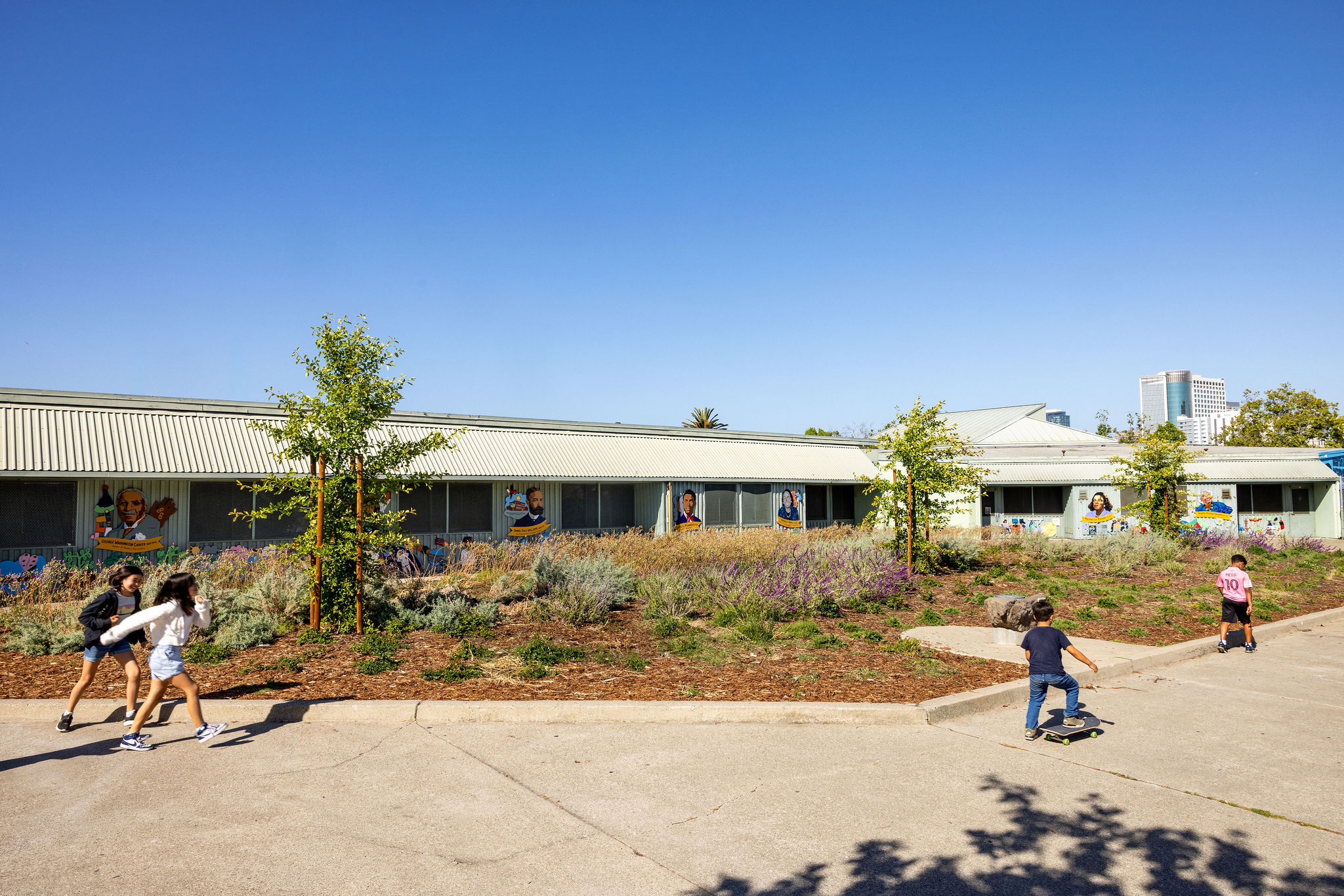
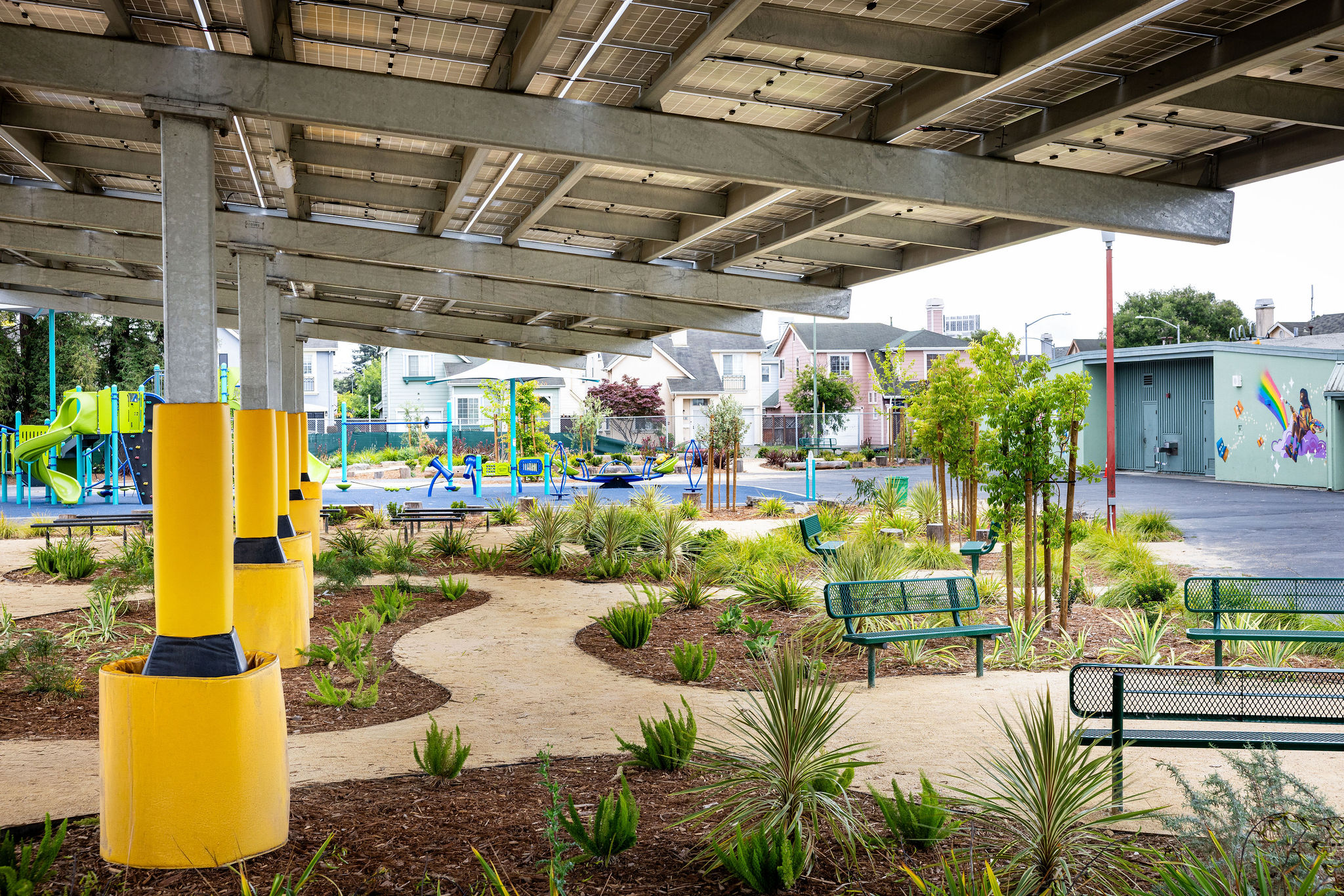
Throughout the project, I often found myself returning to Hillary Clinton’s words, “There is no such thing as other people’s children.” That idea became an underlying thread for me throughout the project. It speaks to why work like this is so important. When we invest in the places where children learn, play, and grow, we are investing in the health and well-being of our entire community.
Landscape architecture has a unique ability to shape the everyday experiences of children, transforming a place that may have once been uninspiring into a place that sparks curiosity, encourages connection, and makes children want to be outside even more. Being able to contribute to that kind of transformation is one of the reasons this project continues to be one of my favorites.”
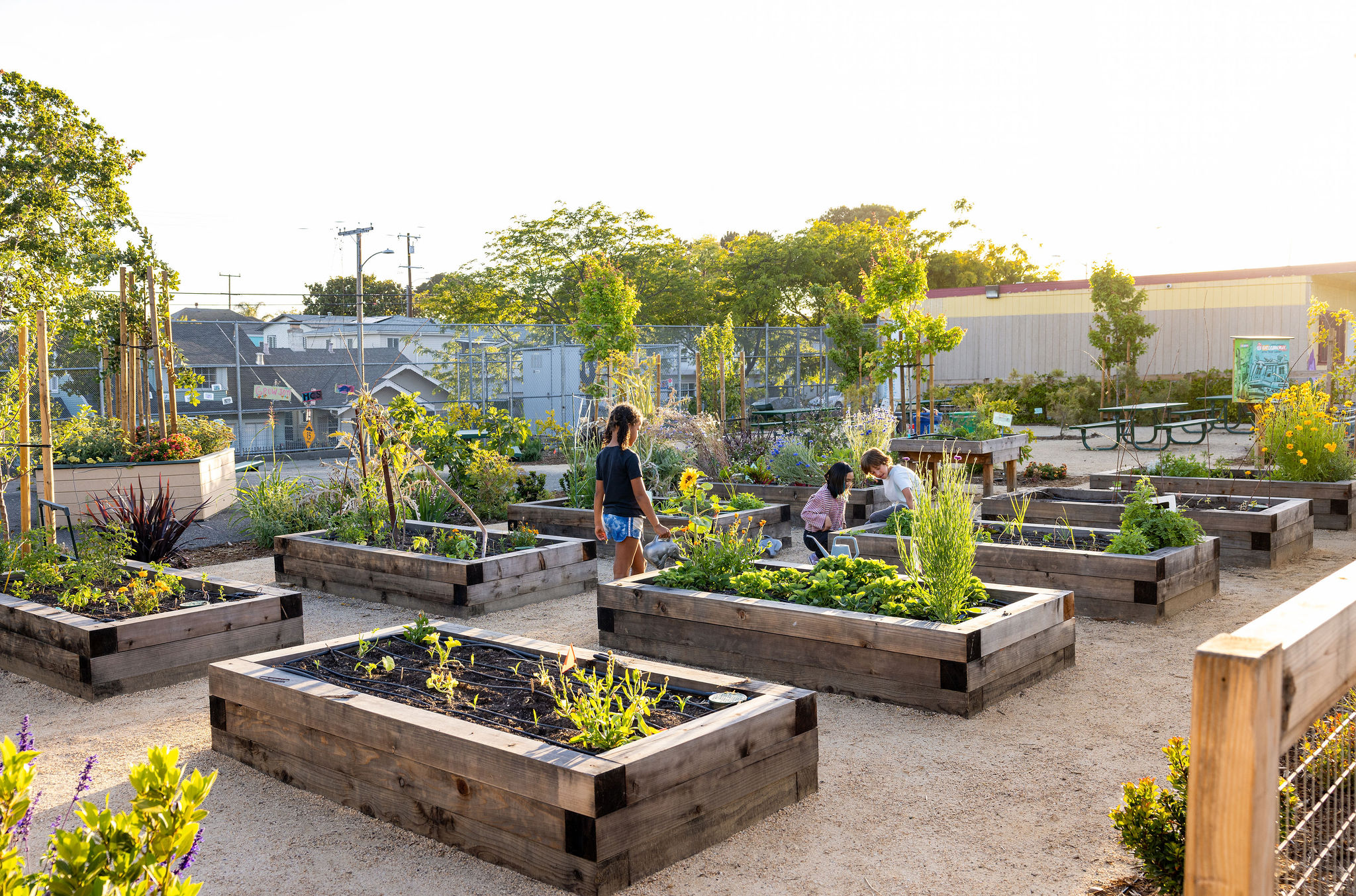
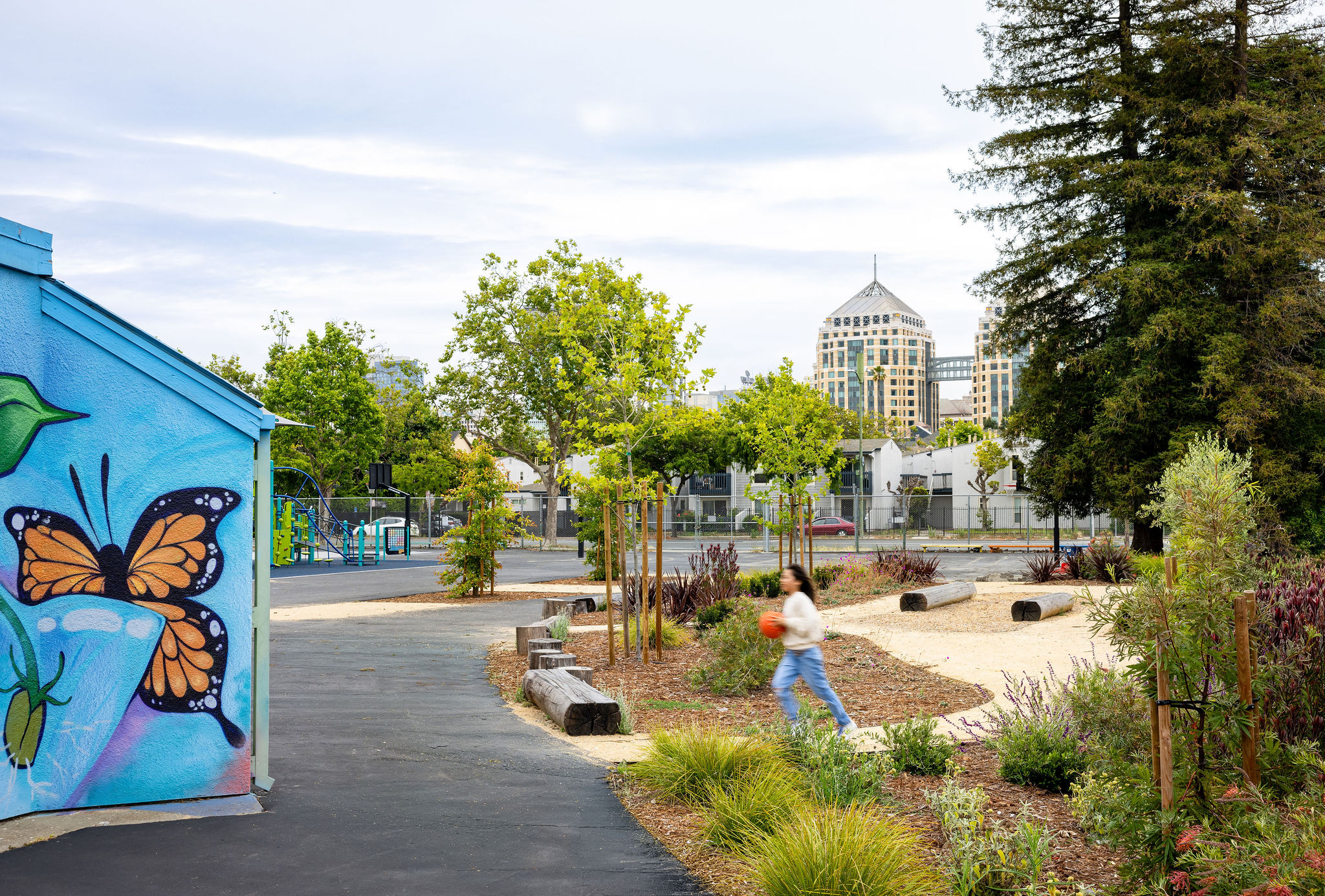
The Living Schoolyards projects reflect the impact thoughtful design can have on the everyday experiences of students. By transforming underused schoolyard spaces into places for learning, play, connection, and discovery, the projects created environments that will continue to serve students and school communities for years to come.
Photography by Rachel Weill
